
Dead leads are prospects who already spoke with your firm and said no, or went quiet after the consultation. In an accounting or tax firm, a dead lead is usually someone who heard about the tax plan and didn't buy it. Most of them aren't dead at all. Something in their situation made it a no at the time, and situations change.
You paid to get those people on the phone once. A well-timed call before year end can turn some of those no's into the plan they passed on, if it's made the right way.
Why Firms Leave Paid-For Leads Sitting in the CRM
Firms leave dead leads alone because nobody has the hours to call them. On camera this September I put it like this, "Most people who run ads think they have a marketing problem, but they really have a sales process problem. You've paid for the leads. They're sitting in your CRM. The problem is, is you don't have the time, energy, or the personnel to go after those dead leads that you've paid for to convert them or to get them back in the sales process."
The owner is in client work. The team is in season. Whoever took the first call has moved on to the next booking, so the list grows, and every name on it is marketing money already spent. When the marketing looks like it's working and revenue still isn't, the real diagnosis usually sits in this gap.
Ads make the list grow faster. "You cannot sell to cold ads the same way that you sold to referrals." A referral arrives already trusting you. A prospect from an ad is comparing you with every other firm they found that week, so more of them say no the first time, and more of them are worth a second conversation.
What Does a Lost Lead Mean?
A lost lead is a prospect you were working who chose someone else or chose nothing, and for calling purposes it's the same person as a dead lead. I define a dead lead as "someone that you've already spoken to and said no for whatever reason." The reason matters, because it tells you who to call first.
Plenty of no's in a tax or accounting firm come down to timing. "Oftentimes when someone says no, it might be because the money, it might be because their wife or husband said no, it might be because they were low on cash flow at the time. Whatever the situation is, it could have changed 3 months down the road." Start with the prospects who named cash flow, a spouse or timing, because those are the reasons most likely to have moved.
A prospect who went with another firm is a different call, and still worth making. They didn't reject the problem, they picked a provider, and a few months with that provider tells them whether it was the right pick. A client who bought and then left is a separate list again, which we cover under win-back.
Two Questions That Reopen the Conversation
Our callers reopen a dead lead with one of two questions. Has your situation changed? Is there anything we could have done better to earn your business? Neither one is a pitch, and both give the prospect a reason to talk about themselves.
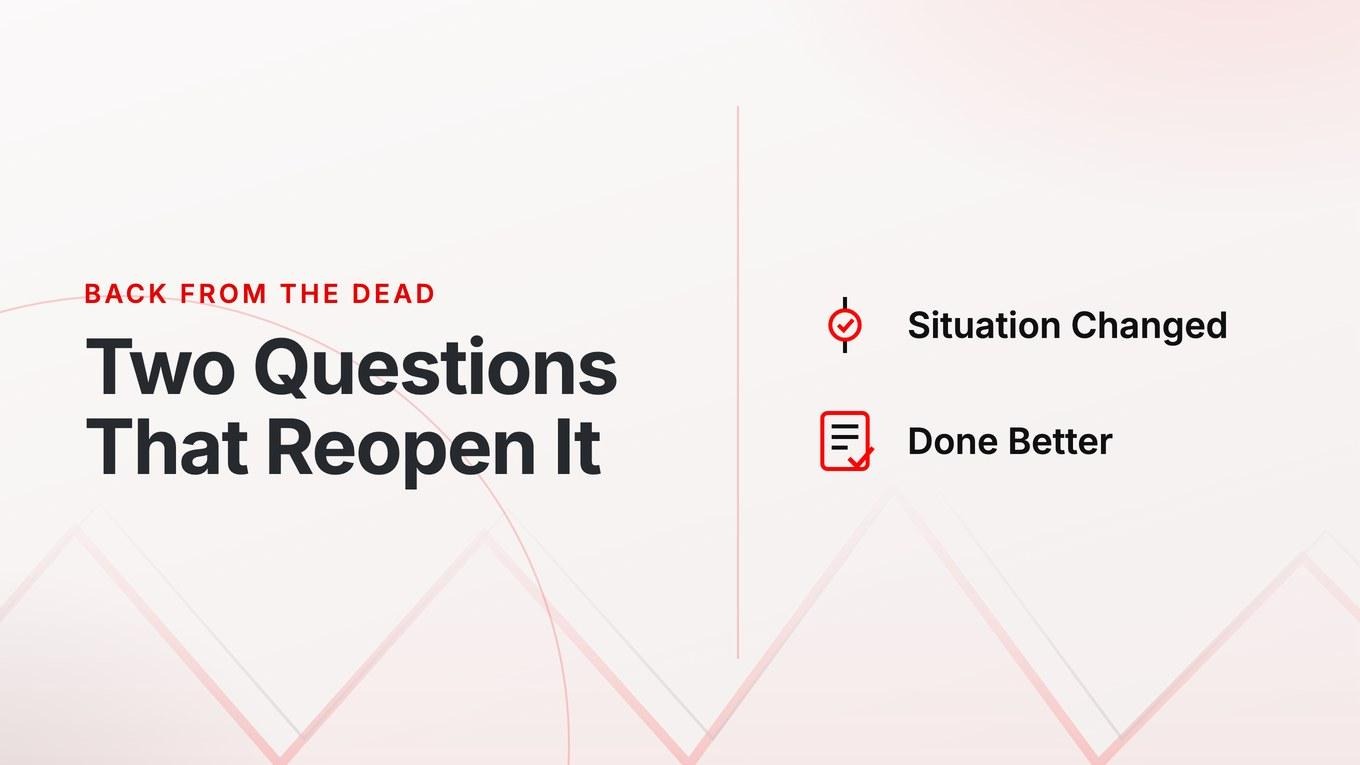
Two questions our callers ask a prospect who said no
The first fits the prospect whose reason was timing. If cash flow was tight in the spring, the call is about whether it still is, and whether the tax bill they were worried about has gone away. The second fits the prospect who didn't like the experience. It feels like the harder call to make, and it's the one that can win someone for good. "You don't create raving fan clients by having everything go right. It's how you respond when things don't go well."
The calls work because of the intent behind them. We're "coming from a place of service and adding value to those people who said no to you," and nobody on the call is trying to close. The goal is a second meeting, and that meeting runs on the discovery questions that decide the deal, the same as a first one would.
Why Someone Other Than the Original Rep Makes the Call
The call goes better when someone other than the person who heard the first no makes it. We call it the buddy system. Say two of our sales professionals are John and Troy. "Troy calls those leads on behalf of John, acting as a third neutral party to get back in the batter's box."

In conversation at one of our events
A neutral caller can ask what went wrong without anyone getting defensive. The prospect can say the first conversation didn't land, and the caller can take that at face value. If the prospect liked the original rep, the caller books them back in with that person, and if they didn't, they meet someone new. Either way, the prospect hears from a firm that noticed.
This is also where a dead-lead campaign and ordinary follow-up part ways. The follow-up in the days after a consultation belongs to the person who ran it. A dead lead is months old, and a fresh voice is the point.
Year End Puts a Date on the Decision
November is the best month to call dead leads in a tax firm, because a tax plan for this year has a deadline built in. For calendar-year taxpayers, the IRS defines the tax year as 12 consecutive months beginning January 1 and ending December 31. A prospect who said no in the spring and still hasn't acted is running out of the year they wanted to plan.
The caller doesn't need to push that point. They ask whether the problem's been solved and what the plan is with a few weeks left. Most prospects work out the deadline for themselves, and the urgency they feel comes from their own calendar.
What One Campaign Produced
In September I described the results of one Back from the Dead campaign our team ran. "We had over 60,000 dead leads. We called 2,682 of them. We booked 132 meetings and we closed about $137,000 from it."
Look at the middle number. We called fewer than one in twenty of the names on that list, which means most of what a list like that is worth was never touched. A firm's own list will be smaller, and its numbers will be its own. What carries over is the method, a neutral caller, two questions, and a deadline the prospect already has.
Who Makes the Calls When Nobody Has the Time
The firms that skip this campaign rarely disagree with it. What they're short of is people with time to sell, and that's what Sales Firm provides. Sales Firm is an outsourced sales department for accounting, tax and bookkeeping firms, with sales professionals, a manager, a recruiter and a trainer. We take the calls on the leads your marketing brings in and run the sales cycle from lead to closed engagement under your brand, and every call is recorded.
We don't generate leads ourselves. Our job is turning the ones you already have into clients. If you'd like to talk through what's sitting in your pipeline before the year closes, book an introductory call.
FAQ
What does "dead lead" mean?
A dead lead is a prospect who already spoke with you and said no, or stopped responding. That doesn't make it a bad lead. The decision didn't happen at the time, and many of those decisions are open again a few months later.
What does cold lead mean?
A cold lead hasn't spoken with you yet, or barely knows your firm, like someone who clicked an ad and never booked. A dead lead has already had the conversation. Dead leads are often easier to restart because they already know what you do.
How to stop losing leads?
Most leads are kept or lost in the follow-up after the first conversation, which we cover in the days after a consultation. For the ones you've already lost, the two questions and a neutral caller above are how you reopen them.