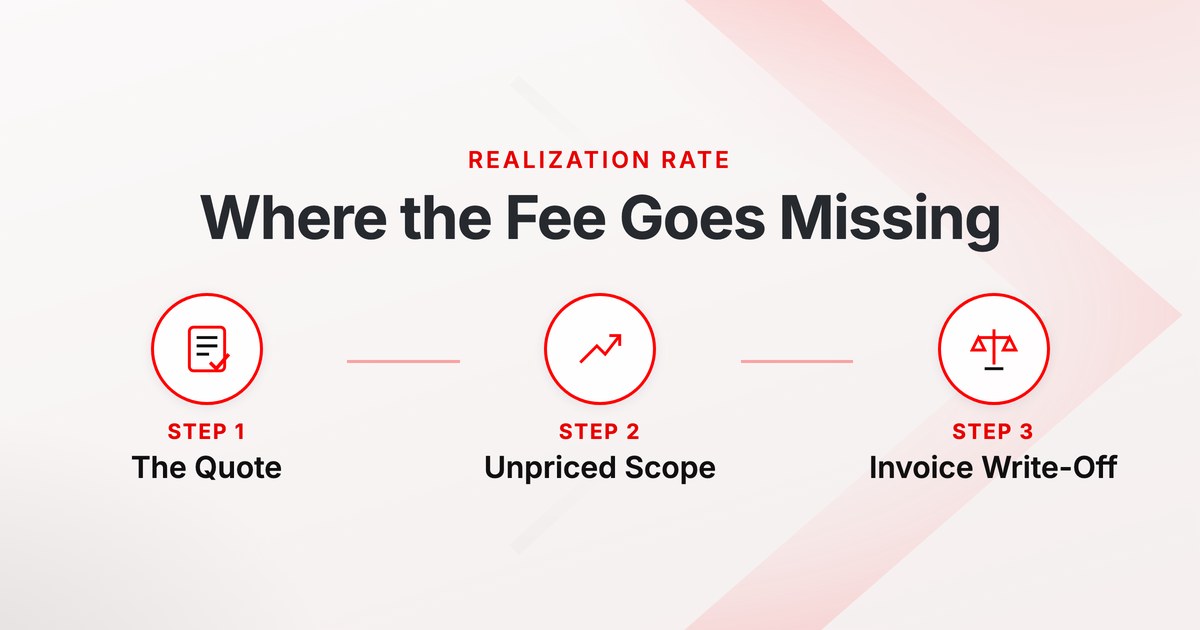

Most accounting firms don't have a sales problem. They have a system problem. The referrals come in, but they're the wrong ones, the small returns, the prospects who haggle, the friend-of-a-friend who ghosts, while the high-value clients you actually want are being referred to someone else. The fix isn't more referrals. It's building the system that attracts the right ones.
I'm Brian Mayoral, and my wife Cassidy and I built Sell Up to fix that exact problem inside accounting and tax advisory firms. Over the last 18 months, our team has generated more than $16 million in new revenue for our clients. Across that client base, we've measured the unpaid time it takes to close a single new client, and the number is consistent: six to twelve hours per closed deal in unpaid sales work. That's the leak. And that's before you account for the prospects who never close at all.
This post walks through how modern accounting firms are closing that leak by building a predictable client acquisition system. That includes structured outbound, paid diagnostics, defined pricing, and yes, referrals run as an actual system instead of a hope.
What is sales for an accounting firm, really?
Sales for accounting firms is the structured process of turning interest into paying clients. It includes positioning your services clearly, communicating value, qualifying prospects, and closing engagements efficiently.
Most firms don't have a sales system. They have conversations. And conversations alone do not scale.
A real sales system replaces randomness with structure. It introduces defined offers, clear pricing, repeatable processes, and measurable outcomes. Instead of hoping each conversation produces revenue, the firm operates with a system designed to produce consistent results. That's the difference between a firm that grows when the partner gets lucky and a firm that grows on purpose.
Why do most accounting firms avoid selling?
Most firms avoid sales because of how accountants are trained and how the culture of the profession develops. Accountants are trained to focus on accuracy, compliance, and risk reduction. They're not trained in persuasion, positioning, or closing. So sales feels uncomfortable. Unnatural. Beneath them.
The result is that firms default to informal approaches: free discovery calls, custom proposals written from scratch for every prospect, follow-ups that go nowhere. Over time this creates massive inefficiency, wasted time, and missed opportunities. And the firm owner, almost always the highest-paid person in the building, is the one absorbing all of it.
Who are accounting firms actually competing with?
Accounting firms are not just competing with other firms. They're competing with doing nothing.
Most prospects already have an accountant. They're not actively looking to switch. They don't feel urgency, and without urgency, there's no action. The role of sales inside an accounting firm is not to explain services. It's to create clarity and create urgency. Without both, even the most valuable service in the world will not convert.
Why do referrals stop working at some point?
Here's where most blog posts on this topic go wrong, and where I want to be precise.
Referrals are not the problem. Passive referrals are the problem.
When I started Sell Up, 100% of our business came from referrals. I love referrals. They close at higher rates than any other channel. They cost almost nothing to acquire. They show up pre-sold. The data backs this up: referral clients convert about 30% better than any other marketing channel, and they carry a 16% higher lifetime value because they stay longer and refer others. Firms that actually ask for referrals consistently see roughly 86% more revenue growth over two years than firms that don't.
The problem isn't referrals as a channel. The problem is what most firms do with them. They wait. They hope a client mentions them at a dinner party. They never define who they want to be referred to. They never time the ask. They never set up a fee or a thank-you. They never close the loop when a referral lands.
That's not a referral channel. That's a referral lottery.
When we work with firms inside Firm Huddle, one of the first systems we install is a structured referral playbook. The short version: ask at the Wow Moment (the specific point inside the first 90 days when the client emotionally feels the value you've delivered), use a defined framework on the call (we call it Give, Get, Give), offer a real referral fee tied to your customer acquisition cost, and track every ask in a four-column tracker. Firms that install this system stop relying on referrals and start running them.
If you want the full playbook, we have a 30-day referral challenge our team built specifically for accounting firms. Ask us about it when you book a call.
What's the hidden revenue leak in most accounting firms?
Most firms give away their expertise for free through discovery calls and custom proposals. They spend hours analyzing each prospect with no guaranteed return. That's the leak.
Across the firms we've audited, the average is six to twelve hours of unpaid analysis per closed deal, and significantly more per deal that never closes. Compound that across a year of prospects, and you start to see why firm owners feel underwater even while the top line looks fine.
The second leak is messaging. Most firms sound exactly like every other firm. Compliance. Tax planning. Bookkeeping. Advisory. Nothing in the language tells a prospect why they should choose this firm over the one their neighbor uses. When everyone sounds the same, price becomes the only variable. That's a race to the bottom no firm wants to be in.
What's the difference between a free consultation and a paid diagnostic?
The single highest-impact change a firm can make is shifting from free consultations to paid diagnostics.
Instead of giving away insights for free, you package your expertise into a structured, high-value offering that clients pay for upfront. The paid diagnostic itself is the product. It might be a tax plan, a profitability analysis, a benchmark study, or a cash flow assessment. Whatever it is, the prospect pays for it before you do the work.
This single shift does four things at once. It filters out low-commitment prospects who were never going to sign. It increases your perceived value because pricing is a signal. It improves your conversion rate dramatically because the prospect has already said yes once. And it ensures every hour you spend with a prospect is compensated.
The principle behind why this works is well-documented. Research published in the Journal of Personality and Social Psychology on the foot-in-the-door effect found that getting someone to take a small initial action makes them 400% more likely to take a larger one later. A paid diagnostic is that small initial action. The full engagement is the larger one.
Across our client base, the paid diagnostic is sized to reflect the value the firm is uncovering and the average annual contract that follows it. The exact number isn't the point. The point is that the diagnostic exists, it's productized, and the prospect commits before you spend a minute of unpaid work.
How do numbers reframe a sales conversation?
Prospects don't respond to features or technical explanations. They respond to specific, tangible outcomes expressed in dollars.
If a client paid $100,000 in taxes last year and you can reasonably reduce that by 30%, that's $30,000 a year. Over five years it's $150,000. That single calculation reframes the entire conversation. Suddenly the prospect isn't comparing your fee to your competitor's fee. They're comparing your fee to $150,000 of money they're currently leaving on the table.
This is why we train our sales professionals to translate every service into a dollar outcome. Not "we'll review your entity structure." Instead: "Most owners in your situation overpay by tens of thousands annually because of how they're structured. Let's figure out what that number looks like for you."
When Ryan Bakke of Tax Strategy 365 brought this approach into his firm with our help, his team's close rate moved from 25% to nearly 40% on higher-end services. Tyler McBroom at TRM CPA had a similar result. After working with us, his sales nearly tripled month over month, even after accounting for seasonality. Neither firm got more leads. They closed more of the leads they already had, because the conversation finally focused on value instead of features.
How do modern accounting firms build a sales system?
A real client acquisition system has five components, and they work together.
A clear, productized offer. Stop selling general services. Communicate specific outcomes prospects actually care about, packaged into something they can say yes to in a single call.
Defined upfront pricing. Replace custom quotes with a published structure. Custom quoting is the single biggest reason firms plateau between $500K and $1M. Every proposal takes two to four hours, every prospect haggles, and the partner is the only person who can quote. Productized pricing removes friction, speeds up decisions, and makes the process delegable.
A repeatable enrollment process. Every lead should move through the same defined journey: qualification, value demonstration, decision. Recording your calls, analyzing the points where prospects drop off, and refining your messaging is how the system gets better month over month.
Real follow-up. RAIN Group's research on sales prospecting found it takes an average of eight touches to generate an initial meeting or conversion with a new prospect. Most accounting firms do two or three at best. The firms that win are the ones that follow up eight times and beyond, with structure, not randomness.
A structured referral system. Not the passive kind. The kind with defined triggers, timing, scripts, fees, and tracking. Same system, applied consistently.
These five components feed each other. A clear offer makes pricing easier. Defined pricing makes the enrollment process repeatable. A repeatable process makes follow-up scalable. Real follow-up surfaces the moments where referrals get asked. The whole thing compounds.
What are the four ways to install a sales function inside an accounting firm?
Once a firm decides to take sales seriously, there are four common paths. Each has tradeoffs.
Build an in-house sales team. Maximum control, maximum overhead. Requires significant investment in hiring, training, management, technology, and ramp time. The first dedicated sales hire at an accounting firm often doesn't work out, which means six months and six figures lost before you know whether the model works at all.
Hire a marketing agency. Generates leads. Doesn't close them. This is a complementary function, not a substitute. A marketing agency without a sales function to convert what it produces is just an expensive faucet.
Bring in fractional sales leadership. Provides strategic guidance but still requires execution resources. Works for firms that already have salespeople and need someone to coach and manage them. Doesn't work for firms that don't have salespeople yet.
Outsource the sales function. A dedicated external team that handles outreach, follow-up, and closing using its own infrastructure, technology, and trained sales professionals. The right fit for firms at $1M+ in revenue with consistent inbound lead flow and a productized offer. Operational in weeks instead of months. No ramp risk. No hiring overhead. We cover this approach in depth in our post on sales outsourcing for accounting and tax advisory firms.
For firms still under $1M with offer or pricing problems, none of the above is the right starting point. The right starting point is fixing the offer first. That's the work we do inside Firm Huddle, and we walk through the full framework in our companion post on how accounting firms sell more without selling more hours.
What mistakes do most accounting firms make when trying to sell more?
A few patterns we see repeatedly across the firms we've worked with.
Relying entirely on marketing without building a sales process to convert what marketing produces. More leads into a broken funnel just creates more wasted hours.
Failing to define a clear offer. If the prospect can't repeat what they're buying after the call, they won't buy.
Continuing to give away expertise for free. Every unpaid discovery call is unpaid work. Every custom proposal is the same. Multiply that by the number of prospects you talk to in a year and the cost is enormous.
Operating without a system. No defined pipeline, no tracked metrics, no recorded calls, no follow-up cadence. Scale is impossible without structure.
Treating referrals as a hope instead of a system. Same problem as above, applied to your single highest-converting channel.
What does a predictable pipeline actually look like?
When the system is working, the firm experiences consistent inbound activity, structured conversations, clear pricing, and higher close rates. The firm owner can forecast revenue with reasonable accuracy. They know where next month's clients are coming from. They know which referral sources are producing. They know which marketing channels are pulling weight and which ones aren't.
That predictability is what lets a firm grow with confidence. It's also what lets a firm finally hire delivery talent, expand into new niches, or take a real vacation, because the revenue engine isn't dependent on the owner being in the seat every day.
What's the future of accounting firm growth?
The firms that win over the next decade will not be the most technical or the most experienced. They'll be the ones with the best systems. Expertise opens the door. Systems drive growth and revenue.
If your firm is still running on referrals you don't ask for, free consultations you don't charge for, and custom proposals you write from scratch every time, growth will stay unpredictable. The fix isn't working harder. It's building the system.
Frequently Asked Questions
What is sales for accounting firms?
Sales for accounting firms is the structured process of turning prospect interest into paying clients. It includes positioning, qualifying, value demonstration, pricing, and closing. Done well, it replaces inconsistent conversations with a repeatable system that produces predictable revenue.
How do accounting firms get new clients without relying on referrals?
By building a complete client acquisition system that includes paid diagnostics, productized pricing, structured outbound, real follow-up, and yes, a referral system that's run on triggers and scripts instead of hope. Referrals are still the highest-converting channel. The fix isn't to abandon them. It's to stop running them passively.
Why is my accounting firm not growing?
The most common reasons are an undefined offer, custom-quoted pricing, no follow-up system, and a passive referral approach. Fix any one of those and growth accelerates. Fix all four and the firm changes shape.
What is a paid diagnostic for an accounting firm?
A paid diagnostic is a structured, productized engagement that a prospect pays for before becoming a full client. It might be a tax plan, profitability analysis, benchmark study, or cash flow model. The diagnostic itself delivers real value, qualifies the prospect's commitment, and typically converts at a high rate into the ongoing engagement.
How do referrals work as part of a sales system?
Inside a real system, referrals are triggered by specific delivery moments where the client emotionally feels the value of your work. The ask is timed to that moment, runs on a defined script, includes a referral fee tied to your customer acquisition cost, and is tracked end to end. Done this way, referrals stop being passive luck and become a measurable channel.
What's the difference between sales and marketing for an accounting firm?
Marketing generates interest. Sales converts interest into clients. The two are complementary. Most firms invest heavily in marketing without ever building the sales process that converts what marketing produces, which is why they generate leads but don't see proportional revenue growth.
Should an accounting firm hire a salesperson or outsource the function?
Below $1M in revenue, neither. The bottleneck at that stage is the offer, not the sales capacity. Above $1M with consistent inbound lead flow, outsourcing is typically faster, cheaper, and lower-risk than building internally. The first dedicated sales hire at an accounting firm often doesn't work out, and the recovery time is significant.
How do I scale an accounting firm or CPA practice?
The firms that scale do it in a specific sequence: productize the offer first, install defined upfront pricing second, build a repeatable enrollment process third, and only then add sales capacity through hiring or outsourcing. Skipping steps creates leakage. Under $1M in revenue, the leverage point is the offer. Over $1M with consistent inbound, the leverage point is sales capacity.
How long does it take to build a predictable sales system?
Productized offer and pricing: a few weeks of focused work. A working enrollment process: 60 to 90 days of execution and refinement. A referral system that produces consistently: 30 to 60 days from install. A complete client acquisition engine running on its own: six to twelve months, depending on how disciplined the firm is about changing one variable at a time.
Where to start
If your firm is still running on referrals you don't ask for, free consultations you don't charge for, and proposals you write from scratch, the path forward is structured.
Fix the offer. Productize the pricing. Build the enrollment process. Install the referral system. Then, and only then, add sales capacity through hiring or outsourcing.
You can learn more about our work at wesellup.com, or book a call directly at wesellup.com/schedule.
Related posts
- Sales Outsourcing for Accounting and Tax Advisory Firms: How $1M+ Firms Convert More Demand Into Clients
- How Accounting Firms Sell More Without Selling More Hours: The Upfront Core Offering Framework
Sources
- Freedman, J. & Fraser, S. "Compliance Without Pressure: The Foot-in-the-Door Technique." Journal of Personality and Social Psychology.
- RAIN Group Center for Sales Research. "Top Performance in Sales Prospecting" benchmark study (488 B2B buyers, 489 sellers across 25 industries).
- Industry research on referral conversion rates and lifetime value (Wharton, Texas Tech, and Nielsen studies on referral performance).