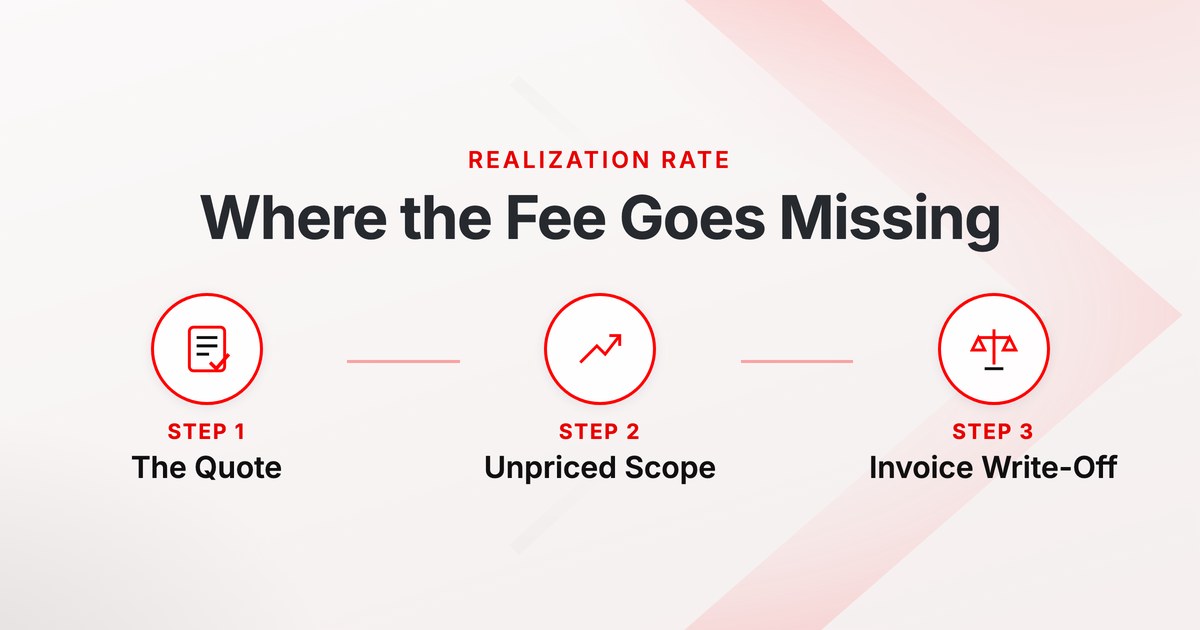

In the competitive landscape of accounting, firms are constantly looking for ways to grow revenue without expanding headcount. But here's the uncomfortable truth most firm owners won't say out loud: referrals alone will run you into the ground.
The proposals take six to twelve hours to build. The prospects ghost after asking for "one more thing." The fees get haggled down to nothing. And the firm owner, usually the highest-paid person in the building, is the one doing all of it. That's revenue leaking left and right.
Sell Up was founded to bring proven sales methodology to the accounting and tax advisory profession. Over the last 18 months, our team has generated more than $16 million in new revenue for accounting firm clients. The pattern across every one of those firms is consistent. The firms that scale don't do it by hiring more salespeople. They do it by fixing the offer first, then adding capacity to sell it.
This article walks through the offer, pricing, packaging, and positioning frameworks we use every day. If you're under $1M in revenue, this is the roadmap. If you're over $1M with consistent lead flow, the last section explains when outsourcing your sales department actually makes sense and when it's premature.
Should I fix my offer or hire a sales team first?
Before going further, it's worth being direct about who this article is for, because the answer changes depending on where your firm sits.
Under $1.5M in annual revenue: Your number one job is not hiring a salesperson. It's perfecting your offer, your pricing, your packaging, and your enrollment process. You don't have a sales capacity problem yet. You have an offer problem. Adding more leads to a broken offer just creates more complexity.
This becomes even more critical as you scale from $500K toward $1M. That's the stage where you, the firm owner, become the bottleneck, because you're the only person who can quote, negotiate, and close. A defined upfront core offering is what finally lets you hand the enrollment process to your team. Without it, every deal still needs you. With it, you've built something repeatable enough to delegate.
This is the work we do inside Firm Huddle.
$1.5M to $10M with consistent lead flow: You've proven your offer. The bottleneck is now capacity. You can't be the lead seller and the lead deliverer at the same time. This is where bringing in an outsourced sales department starts to earn its keep, and it's the stage Sell Up's outsourced sales offering is built for.
The frameworks that follow apply to both stages. But for sub-$1.5M firms, they're the entire game.
What are the three ways to grow an accounting firm?
There are only three ways to make more money in a service business:
- Get more people to buy your services
- Get people to pay you more for your services
- Get people to pay you more, for longer
Everything that follows, the upfront core offering, problem-solution mapping, and selling benefits, feeds directly into one or more of these three levers.
Why do most accounting firms struggle to sell?
The average accounting sales cycle bleeds time and money at every stage. A typical prospect engagement involves a 30 to 60 minute discovery call, then access to documents or QuickBooks, then a custom proposal, then a follow-up call, then haggling on price, then sending an agreement. Then the prospect ghosts. Two weeks turns into two months. Two months turns into two years. Two years turns into never.
Each step is a resistance point. The root cause is too many decisions. When you offer itemized, custom-quoted services, clients get paralysis through analysis. They feel nickel-and-dimed. There's no clear path to the best solution, and they compare you like a commodity to everyone else.
A useful analogy: imagine ordering at a fast food kiosk where every item, the burger, the fries, the drink, the shake, is priced individually. You'd start deleting things. Not because you didn't want them, but because of the way you were forced to choose. Nobody deletes the fries because they didn't want them. They deleted them because there was no clearly defined package.
According to a Stanford University study on choice overload, when options are reduced from 24 to 6, people buy ten times more. Clarity sells. Confusion repels.
Across our client base, we've reduced the average accounting sales cycle from six to twelve hours per closed deal down to thirty minutes to one hour per prospect. The mechanism wasn't a better closer. It was a better offer.
Framework #1: The Upfront Core Offering
The first shift is moving from custom, itemized proposals to a defined upfront package clients can say yes to quickly.
We first tested this when Tyler McBroom's CPA partner asked if we could sell accounting services. The first weekend using an upfront core offering, his team sold $1.4 million in tax services.
The key insight: you don't need to look under the hood before charging. You can charge 20 to 30% of your average annual contract upfront, then deliver the diagnostic value afterward. When people pay, they pay attention.
Research published in the Journal of Personality and Social Psychology shows that getting someone to take a small action makes them 400% more likely to take a larger one later. And according to Bain & Company, a 5% increase in client retention can increase profits by 25 to 95%.
Why upfront packages make closing easier:
- The conversation shifts from price to value
- The client chooses which option, not whether to buy
- You avoid piecemeal, hourly conversations
- Clients buy based on transformation, not menu items
For sub-$1M firms, this is the highest-leverage change you can make this quarter. It converts the unpaid sales work you're already doing into a paid product, and closes most engagements in a single call.
Framework #2: Problem-Solution Mapping
After recording and analyzing 20,000 consultations, we found that accounting clients only ever fall into four pain buckets:
- Tax bill: They're overpaying in taxes and want relief.
- Cash flow: The number one reason businesses fail. They don't know their numbers.
- Lack of communication: Their current accountant doesn't educate or communicate clearly.
- First-time growth: They're making real money for the first time and need guidance.
Every prospect fits one of these four. Your job in a sales conversation is to identify which bucket they're in, then map your solution directly to that problem. No jargon. No over-explaining. No features.
When we applied this framework inside Tyler McBroom's firm, his sales tripled.
Framework #3: Selling Benefits, Not Features
Clients don't care about entity structure review. They don't care how the sausage is made. They care that they get to eat.
Feature
What Clients Actually Hear (Benefit)
Entity structure review
Most owners overpay simply because of how they're structured. We find and fix that so you're not leaving hard-earned money on the table.
Quarterly meetings
You'll never be caught off guard at tax time. We keep you ahead of the numbers all year.
Cash flow forecasting
You'll always know exactly what's coming in and going out, so you can make decisions with confidence.
When we applied this approach with Ryan Bakke of Tax Strategy 365, reframing just one feature of his offer as a benefit, his team's closing rate climbed above 40% and tripled previous results.
These three frameworks, upfront core offering, problem-solution mapping, and selling benefits, are the same methodology we teach inside Firm Huddle, and the same playbook our sales professionals use when enrolling clients on behalf of $1M+ outsourced sales partners. The work is identical. What changes is who executes it.
What does the upfront core offering look like in practice?
One of the clearest examples we've seen is a firm owner named Ron. He had built his firm to a few hundred thousand dollars and was ready to quit. His question: "How am I supposed to charge thousands of dollars upfront? Is my stuff even worth it?"
We identified the 10% of Ron's clients who had the highest margins and built a core offering around that niche. The result: Ron sold his first $4,000 tax plan, which converted into $20,000 of recurring revenue. He stopped chasing clients for documents. He stopped doing work before getting paid. And that single engagement led to 25 more happy clients.
He became someone who was selling outcomes, not activities. When firm owners learn to have esteem for the things they're selling, every single one of them can do it.
When does outsourcing a sales department make sense for an accounting firm?
Here's the part most articles about outsourced sales for accounting firms get wrong: outsourcing sales does not fix a broken offer. It scales the leak.
If your offer isn't packaged, your pricing isn't clear, and your enrollment process isn't repeatable, hiring or outsourcing sales talent will burn budget and produce the same ghost rate you're getting now. The right sequence is:
- Fix the offer (Firm Huddle territory)
- Prove it converts at $1M+ in annual revenue
- Then add capacity through hiring or outsourcing
Once a firm clears that threshold, the math on bringing in an outsourced sales department becomes obvious. The accounting firm owner is the highest-paid person in the building. Every hour they spend on a discovery call, building a custom proposal, or chasing a ghosted prospect is an hour not spent on delivery, hiring, or strategy. At $1M+ with consistent lead flow, the question stops being "can I afford to outsource sales?" and becomes "can I afford to keep doing this myself?"
What an outsourced sales department actually delivers at this stage:
- Dedicated sales capacity: A buffer between the person who closes and the person who delivers. Accountants are brilliant. They're not salespeople, and they shouldn't have to be.
- Specialized expertise: Trained professionals who run a tested enrollment process across thousands of consultations, not someone learning on your prospects.
- Predictable cost structure: Performance-based pricing that ties spend to outcomes, instead of carrying full salaries, benefits, and ramp time for in-house hires.
- Faster ramp: An outsourced sales team is operational in weeks, not the six to nine months it typically takes to hire, train, and ramp an in-house seller.
Sell Up's outsourced sales offering is built specifically for accounting firms in the $1M to $10M range with consistent lead flow. The frameworks above are what our sales professionals execute every day on behalf of those firms.
What stage is my accounting firm in, and what should I focus on next?
A quick self-diagnostic:
- If you can't articulate your offer in one sentence, you're in Firm Huddle territory.
- If your pricing changes per prospect, you're in Firm Huddle territory.
- If you're spending more than two hours per closed deal in unpaid sales work, you're in Firm Huddle territory.
- If your offer is locked in, your close rate is consistent, and your only constraint is time on your calendar, you're ready to outsource your sales department.
Frequently Asked Questions
How do accounting firms sell more without hiring more staff?
The fastest path is replacing custom proposals with a defined upfront core offering. This converts the unpaid sales work the firm owner is already doing into a paid product, reduces the average sales cycle from six to twelve hours per deal down to under an hour, and lets the firm grow revenue without proportional growth in delivery headcount.
How do I price accounting services without doing free discovery work first?
Charge 20 to 30% of your average annual contract value as an upfront diagnostic package. This converts the work you're already giving away into a paid product, qualifies the prospect's commitment, and closes most engagements in a single call instead of a six-week proposal cycle.
How do I stop giving away free consultations and proposals?
Replace itemized custom quotes with one defined upfront package every prospect can say yes to. The pre-paid package becomes the discovery work. You stop investing six to twelve hours of unpaid time per deal, and prospects stop ghosting because they've already committed.
What should an accounting firm charge upfront before doing the work?
The right upfront fee depends on your niche, your average annual contract value, and what the diagnostic actually delivers to the client. The principle is that the fee should be high enough to qualify the prospect's commitment and compensate you for the discovery work you'd otherwise give away, and structured so it converts naturally into the ongoing engagement. Inside Firm Huddle, we work with each firm to set the specific number based on their offer and ideal client.
How do accountants move from hourly billing to value-based packaged pricing?
Identify the top 10% of your existing clients by margin and build a core offering around their use case first. Price the package based on outcomes, not hours. Apply the upfront fee toward the first or last month of the ongoing engagement to lock in year-one commitment without losing total contract value.
Why is my accounting firm stuck under $1M in revenue?
The most common ceiling at sub-$1M is custom quoting. Every proposal takes two to four hours, every prospect haggles, and the firm owner is the only one who can sell. Until the offer is productized and the enrollment process is repeatable, adding leads or staff just amplifies the bottleneck.
When should an accounting firm hire or outsource a sales team?
Once the firm is consistently generating $1M+ in annual revenue with a packaged offer and a predictable close rate. Below $1M, the leverage point is fixing the offer itself. Above $1M with consistent lead flow, capacity becomes the binding constraint and an outsourced sales department typically delivers faster ROI than in-house hiring, with operational ramp in weeks instead of months.
What is an outsourced sales department for accounting firms?
An outsourced sales department is a dedicated external team of trained sales professionals who run discovery calls, deliver proposals, and close engagements on behalf of the firm. The team uses the firm's branding, services, and pricing, but operates with its own sales infrastructure, training, technology, and reporting. For accounting and tax advisory firms specifically, the model works best at $1M+ with consistent inbound lead flow and a productized offer.
How is outsourced sales different from a sales agency or lead generation agency?
Lead generation agencies generate prospects. Sales agencies for professional services close them. The two functions are complementary, not interchangeable. A lead gen agency without a sales function to convert the leads is just an expensive faucet. An outsourced sales department without lead flow has nothing to convert. Most firms at $1M+ need both, in that order.
What's the difference between Firm Huddle and Sell Up's outsourced sales offering?
Firm Huddle is an advising program for firms under $1M, focused on offer optimization, pricing, packaging, and building a repeatable enrollment process. Sell Up's outsourced sales offering is a fully managed external sales team for firms at $1M+ with consistent lead flow. Both apply the same underlying methodology.
What's the right order to scale an accounting firm?
The firms that scale past $1M, $5M, and $10M don't do it by hiring sellers first. They do it by fixing what they're selling, then adding capacity to sell it.
Fix the offer. Prove the close rate. Then scale.
Learn More
- Under $1M in revenue? Firm Huddle is built for you: https://www.wesellup.com/what-we-do/firm-huddle
- Over $1M with consistent lead flow? See how we take sales off your plate: https://www.wesellup.com/what-we-do/sales-firm
- About Sell Up: https://www.wesellup.com/about-us
- Results: https://www.wesellup.com/results
- Resources: https://www.wesellup.com/resources
Sources
- Iyengar, S. & Lepper, M. (2000). "When Choice is Demotivating." Stanford University, published in the Journal of Personality and Social Psychology.
- Freedman, J. & Fraser, S. "Compliance Without Pressure: The Foot-in-the-Door Technique." Journal of Personality and Social Psychology.
- Reichheld, F. Bain & Company research on customer retention and profitability.