
Firms usually get to this question in the wrong order. They decide to hire a salesperson, they interview several, they like one, and then somebody asks how the person gets paid and the conversation stops. Compensation is not an administrative detail you settle after the offer. It is the mechanism that decides what your new hire does every morning.
The Short Answer
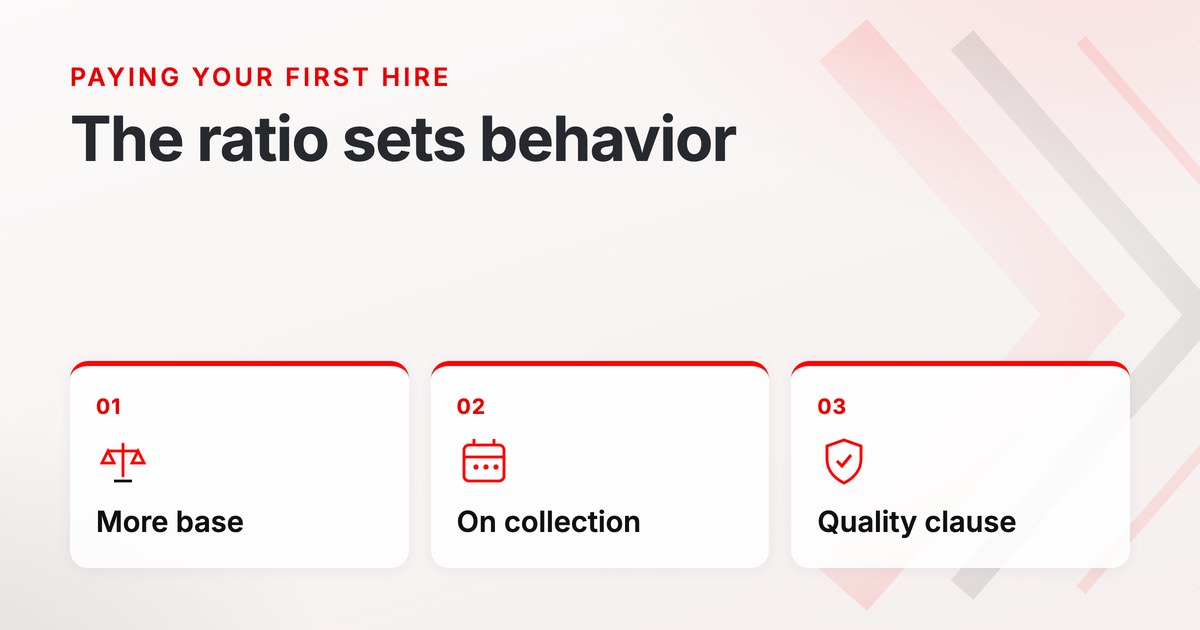
A sales compensation plan combines a fixed base with variable pay tied to results, and the ratio between them sets the behavior you get. Heavier base buys patience and long sales cycles. Heavier commission buys urgency and volume. Accounting firms almost always need more of the first than their instincts suggest, because the sales cycle is long and the damage a rushed close does is expensive.
Why Firm Compensation Is Genuinely Different
Three differences change the maths.
The cycle is long. A prospect who first speaks to you in September may not sign until after year end. A plan that pays only on closed business will starve a good hire through their ramp period and you will lose them before they produce.
The client is recurring. Most firm revenue renews. That raises a question a product business never faces, which is whether the salesperson is paid on the first year only or on the ongoing relationship, and for how long. There is no universally right answer, but there is a wrong one, which is leaving it undefined until the first renewal arrives.
The wrong client costs more than no client. In a firm, a badly matched engagement consumes delivery capacity, generates write offs, and occupies a partner. A plan that pays purely on signed fees will reliably produce clients your delivery team resents. Whatever structure you choose needs a quality condition attached.
The Structures Worth Considering
Base plus commission. The default, and usually right for a firm’s first hire. A meaningful base covers the long cycle, commission rewards the outcome. The design decisions are what triggers commission, whether it is paid on signature or on collection, and whether it continues into year two.
Base plus bonus on milestones. Better when the role is partly business development and partly relationship management, which is common in smaller firms. Milestones can include qualified meetings booked, proposals delivered, and engagements signed, which keeps activity visible during a long cycle.
Draw against commission. A regular payment recovered from future commission. It looks generous and it is the structure most likely to end badly in a firm, because a slow first two quarters is normal here and the hire ends up in debt to their employer for doing a normal ramp.
Progressive rates. Higher commission percentage above a threshold. Useful once you have history to set the threshold against. Nearly impossible to set fairly for a first hire, because you are guessing at the number that defines success.
Whichever structure you use, our sales glossary covers the underlying terminology, and the plan should be written down before the offer goes out, not after.
The Clawback and Quality Question
Two clauses save firms a great deal of trouble.
The first ties commission to collection rather than to signature. A signed engagement that never pays is not revenue, and the salesperson should not be paid on it.
The second is a retention condition, meaning commission is adjusted if a client leaves inside a defined early window. This is the clause that stops a hire from selling to anyone with a pulse, and it is worth the awkward conversation at offer stage.
Neither clause needs to be aggressive. They need to exist and be understood by both sides before anyone signs.
Before You Design the Plan, Check You Need the Hire
Worth pausing here. The compensation question assumes a full time hire is the right model, and for a lot of firms it is not. We laid out the alternative in should accounting firms hire a fractional sales team, which is the decision that comes before this one. If you have not made that decision deliberately, make it first.
If the answer is a hire, the sourcing problem is the next one. Our college placements service exists because firms consistently underestimate ramp time, and we place pre vetted graduates who already have sales training behind them. You can book a placements call if that is the route.
If the answer is that nobody in the firm wants to own this, Sell Up as your outsourced sales team handles recruiting, training, and performance management as one function, and the compensation question stops being yours. Either way, talk it through with us before you write the offer.
FAQ
What is a good sales compensation plan?
One that pays enough fixed income to survive your actual sales cycle, ties variable pay to outcomes the salesperson genuinely controls, and includes a quality condition so the plan does not reward bad clients. It should also be simple enough that the person can calculate their own pay without help. Plans people cannot compute do not motivate anyone.
What is an 80/20 sales compensation plan?
Eighty percent of target earnings from base salary and twenty percent from variable pay. It suits long cycle, consultative, relationship led selling, which describes most accounting firm business development. It is usually a better starting point for a firm’s first hire than the aggressive splits common in product sales.
What is a 70 30 bonus structure?
Seventy percent fixed and thirty percent variable. A middle position that keeps income stable through a long cycle while making a meaningful share of pay depend on results. Many firms land here once they have a full cycle of history to design against.
What is a 60 40 sales plan?
Sixty percent base and forty percent variable, weighted more heavily toward performance. It fits shorter cycles, higher volume, and a role with real control over the outcome. For a firm where partners still influence most closes, forty percent at risk usually punishes the salesperson for constraints they cannot fix.